Hiroshima and Nurturing Education Change

Hope Agency Compassion Curiosity Connection
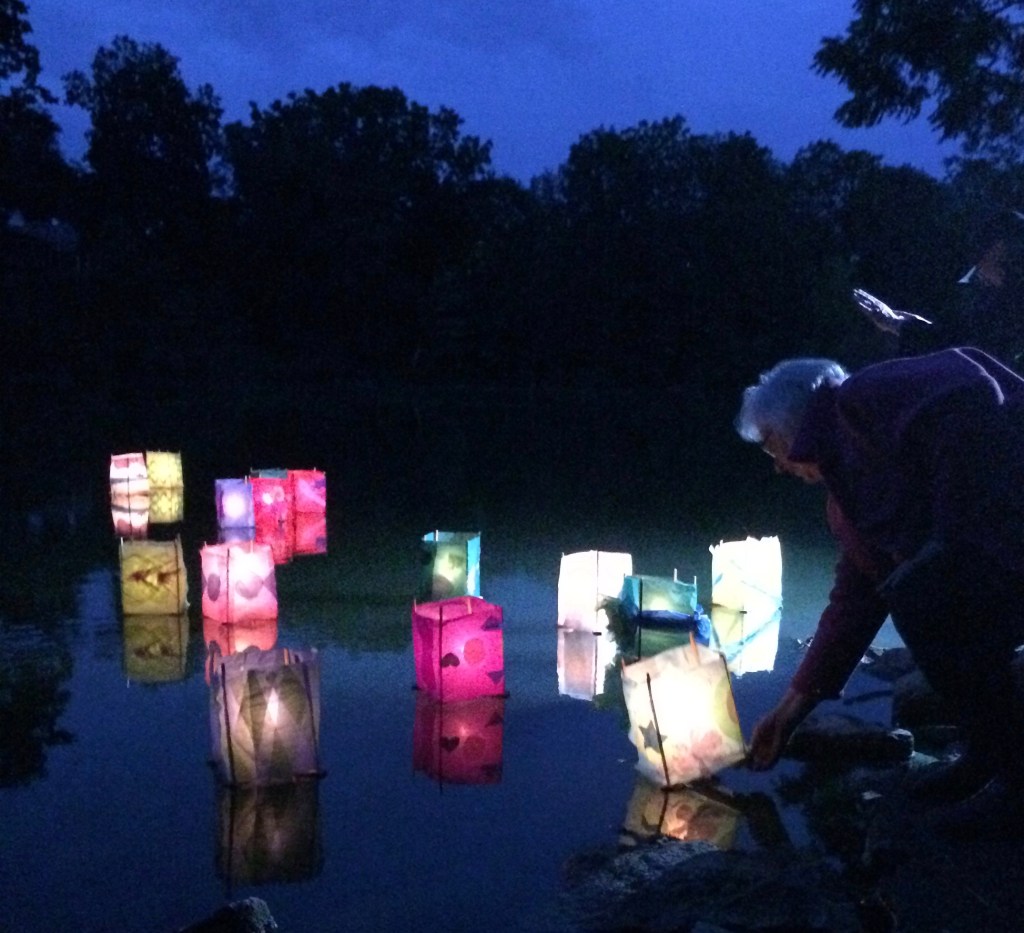
Photo by P Gere

We think that our young people need skills and they do. Skills of the hand and skills of the mind, schooling has always given these in one form or another, to a greater extent at different times. But the skills of the heart and of the spirit have not been front and centre of our education system. They have been left to religions and to family, extended family and community. But with the demise of formal religious observance, the dissolution of extended family, and the lack of deep community ties, these lessons of the heart and spirit are at the mercy of prevailing culture which no longer holds them dear. And that is a grave danger but also an incredible opportunity.

August 6 is the 80th anniversary of the nuclear bombing of Hiroshima, followed on August 9 by that of Nagasaki. As I met with some others to plan a commemorative lantern launching, I mused about what I am doing to prevent such catastrophic events again. For me the action that gives me hope is my belief in the power of change we can bring through the way we choose to educate our young. I try to carry peace in my heart, to act out of peace as I walk in the world but my hope is in the children and youth, my hope is in the power we have to influence the future through our young.

Connection, curiosity, compassion, buttressed by hope and moved by agency. Wouldn’t the world be a better place for everyone – and everything – if we made these three c’s a priority in education?

We humans are connected to everything. To everything that surrounds us – the air we breathe, the water we swallow, the food we eat, the soil that provides our food, the atmosphere that provides just the right conditions for our life. We are connected to the past that brought into being our world, our ancestors, ourselves. We are connected to the future through our children, through what we have done, contributed, taken.

When we approach life with curiosity rather than condemnation or fear we are more likely to see these connections and seek out their significance. Humans are built for inquisitiveness, for creating patterns of understanding, to seek meaning through connecting ideas. It is how we are, it is humanity’s gift.

Compassion. We don’t always get it right. In fact, although we often ignore or conveniently forget, the fact is that we humans learn through approximation, through error. Watch a child learning to walk for the first time, listen to the babbling of a child before they can form words accurately. We’re so accepting of this in children but not in adults – not in ourselves and not in others. Yet it is the way we are built. The reality is that we often make errors on our way to getting things right. Compassion – we need compassion for ourselves and for others. Compassion that comes from seeking to understand (curiosity), and realizing our connection.

What would schooling look like if we prioritized nurturing the capacity for connection, curiosity and compassion buttressed by hope and agency? Yes, our youth need intellectual and practical skills, and reasoning minds, but to use them well they must understand, viscerally, their place in the world and in time, and their capacity and duty to influence that world. What curriculums would we teach but, perhaps more importantly, how would we teach?

Photo by Kampus Production on Pexels.com

Schooling would have a different character. It might include mixed age classrooms where learning and working together were the primary activity; where observation supported the journey to mastery of skills – where grades were not given but everyone received encouragement, support and acknowledgement of their journey. It might be connected to the world but also to the community that surrounds it, multigenerational with little children bringing smiles to the elderly and receiving hugs and stories in return. With youth learning practical skills and future careers alongside adults already using them. It might be learner-centred and teacher-guided. Here are some programs that are exploring these possibilities – programs that do successfully engage the mind but also the heart and the spirit, benefiting both the student and the world.

The great power of humans is that our children are born only partially formed. They cannot walk or talk or forage for food. Their minds at birth are still learning and absorbing the environment around them. If we surround them with the attributes of a peaceful world, and prioritize connection, curiosity and compassion in their upbringing and education they can and will absorb this and create the peace our world so desperately needs.

Expanding these possibilities into a deeply entrenched educational system will not be easy but neither is it impossible. If we prioritize the conditions of peace as we educate the mind, a ceremony to release lanterns would be solely to console the souls of past victims rather than one for the souls that need consolation now and for the souls in the future that will someday need the same consolation.

Resources related to Hiroshima:

Are We Done Fighting? A book by Matthew Legge brimming with the latest research, practical activities, and inspirational stories of success for cultivating inner change and spreading peace at the community level and beyond.

Hiroshima Interpreters for Peace An organization and website filled with hope.

The last week of school and grading gets a failing grade

Assigned work and grading detracts from life-long learning.

It’s the second last Wednesday of the school year. My Grade 8 granddaughter is musing that tomorrow is the last day her teacher will accept assignments. “What about any work we do in the last week. How does it count?” Such a pertinent question! 

“How does it count?” When schooling is about doing what you’re told to do, in the way you’re told to do it, in order to be told how well you have done, in order to get a grade, it fails even if students get ‘A’s.

Image AI generated

Learning for the sake of learning; learning how to learn and discern, being engaged, being curious. These are the attributes humans need to thrive in today’s world. A thirst to learn, discern and act. A wonderment and a belief that we have a role to play in this world of ours.

Our curriculum-centred, teacher-directed, graded schooling does not encourage these attributes; in fact, it squashes them.

Several years ago, the parent of a second grade student named Meg engaged me, the principal of an independent K – 8 school, in a quick conversation on the sidewalk after morning drop-off and before rushing onto her job.  “I thought this school didn’t assign homework.”

She was correct. Our school did not assign students homework except if a student had a special need where a small amount of repetition at home would help, such as practicing math facts for 5 minutes in the car on the way to school. We did assign parents ‘homework’. We asked parents to read daily with their children. We asked them to spend time with their children doing something together that they both enjoyed like going for a bike ride, or something that needed doing like making a meal. Driving to an activity or watching a screen didn’t count!

Why was she asking? Meg’s mom explained that the previous night she had found a book about animals, a pencil and some papers where Meg had made notes – in Meg’s bed, where she had obviously fallen asleep while working. Why hadn’t she been told that Meg had an assignment due? She and her husband would have been happy to help her complete the work. I said I’d look into it for her.

Image AI generated

Well, it turns out there was no assignment, there was no homework. Meg had become interested in marsupials and had decided to do a project. School ended for the day but Meg wasn’t done so she took the book and her notes home. Meg didn’t ask her teacher; she just assumed that her exploration, her work, could continue at home. Why not?  Meg wanted to know more and didn’t see the need of waiting for school. This was her learning. Meg believed it could take place anywhere, whenever she had time, even in bed before falling asleep.

Schooling would do a much better job of educating youth if the system supported this type of learning – student-driven, curiosity-driven, I-can’t-wait-to-find-out driven!

Superintendents, principals, teachers, and most parents expect work to be assigned and assessed. As a result, the last weeks of school are often filled with entertainment designed to keep students quiet as teachers need time to receive work, mark it, write up report cards and have those reviewed. This is a systemic problem, the system encourages completion of assignments for the sake of getting a good mark rather than encouraging learning for learning’s sake.

But how will we know how well students are doing if we don’t grade? How about keeping track of mastery? This is what we did in Meg’s school. We didn’t give grades. We did keep careful weekly records of what each student had been introduced to, was working on and had mastered. This was essential for us because our teaching was individualized even though we had classes of 25 to 30 students. It all worked because we relied on students’ natural desire to be challenged and we tailored our interactions to their interests, abilities and needs. We could say what a student could do well, what they were working on and what they were just being introduced to in any week of the year. We had no need to give them a grade to be able to discuss who they were as a learner and where they were on that journey.

Think about it. We don’t give toddlers marks for learning to walk or talk. We support each toddler where they are with encouragement, support and joint celebration of their accomplishments. We don’t compare or grade them and yet they all become accomplished walkers and talkers unless there is some disability and even then they are driven to achieve these skills in whatever way we can help make possible.

A non-graded schooling model based on students initiating their learning for inherent joy and accomplishment would lead to a much different learning culture than the one that is most common now. The last weeks of school would have as much learning value as all the other weeks of school. And, as Meg demonstrated, learning would more likely continue outside of school, in the evenings, on weekends, and even over the summer break.

Instead of learning only in and for school, youth should be groomed to learn for life. Then our education system would be much more likely to meet today’s ever changing needs. A thirst to learn, discern and act – here are some Canadian, Indigenous and international programs that are stepping into this possibility and some organizations and individuals who are encouraging it.

Student Angst: The Disconnect Between Classrooms and Student Needs  

(As I was preparing to post this article, the CBC published Jessica Wong’s article Teacher shortages persisted this school year. What’s being done to fill the gap for the next? The CBC article is broad ranging, as it should be, but clearly indicates that student angst plays a major role in teacher shortages.)

As the principal of a large preschool through Grade 8 independent school, I did not often have students brought to my office for disciplinary reasons. Our school worked diligently to meet the individual needs of our students at each stage of their development. With careful observation, freedom for teachers to choose appropriate responses, and joint problem solving, there were few disciplinary problems. But one boy, Paul, new to our school, was acting out in his preschool class of 3- to 6-year-olds. He was 4 ½ years of age but big for his age and easily mistaken for a 6-year-old. He was being aggressive towards the adults and just couldn’t settle to any activity. He was challenging and rough on the playground as well. His teacher, the other adults, his parents and I had talked about him and tried a number of different approaches and agreed that if he was having a particularly difficult time, he could be brought to my office and ‘hang out’ with me. He could work/play at a table in my office or come with me as I did my daily ‘walk-about’ the school and then return to his classroom when he was ready. This worked on several occasions but it so happened that one day, when his teacher brought him to my office, he stood just outside my door but wouldn’t come in. After some discussion with him, I finally said, “Just step in for a moment.” Well, that’s exactly what he did. He stepped over the threshold, paused and immediately stepped back outside. I had to laugh, and so did he. I stepped out and invited him to walk with me to see what we could see around the school. He came with me and eventually I dropped him back at his class.

Illustration AI generated

This was a turning point – for me! When Paul, stepped into and then immediately back out of my office, a light bulb went on. Paul was in the wrong class! By age and academically he should be with the 3- to 6-year-olds, the preschool group, but when I thought about it, he had many characteristics of an early elementary child. He was physically large for his age and well-coordinated. Outside he loved to play organized sports, not be in small, less organized groups that younger children prefer. And, as he demonstrated at my office door, he had the mindset of an elementary child with the play on words. Now his academic skills were not high and there were many things, including being able to read, that he couldn’t do as well as an elementary student but we could manage that whichever class he was in. So, after explaining this to his parents and then to Paul, ‘We think you’ll be happier in an elementary class. Would you like to give a try?” we moved him to a lower elementary class of 6- to 9-year-olds, Grades 1, 2 and 3.

And that was almost the end of Paul’s visits to me. His elementary teacher had conferred with his previous teacher and brought materials that he might need into her class and put them on the shelves for anyone to use, including Paul. Elementary children being pack animals who love to play and work together in groups, welcomed Paul into their midst.  With bigger kids to work and play with all day long, Paul was in his glory and deeply content. His new friends helped him when he needed their assistance. He worked hard to try to catch up and keep up. Now he only visited me in my office to show me a project he and his new friends wanted to share.

What happened? Paul had reached the developmental stage of an elementary child early and he needed learning and play environments that matched his advanced development even though he wasn’t academically ready. His developmental needs trumped his academic abilities and once his needs were met, his misbehaviour disappeared and he used his energies to become one of the gang in every sense, including academically.

Perhaps the most striking example of this disconnect in education today is seen with adolescents. The apathy, anger, disrespect and violence evident in high school is the tip of the iceberg. The underlying truth is that high schools do not meet young people’s needs and now more than ever that matters. Without the discipline and expected respect of previous generations, high school students are acting out, as they have done in earlier times, but with greater frequency and at a more disturbing level.

All humans are born with drives to strive, explore, move, order, learn patterns, socialize and communicate. We use these extensively as we are growing up to become an adult adapted to the times we live in. These drives are with us throughout our lives but at different periods in our development these and other drives are more prominent.

Photo by Mikhail Nilov on Pexels.com

The preschool child must move. Sitting still for any length of time is difficult if not impossible. These children are refining their motor skills. They use their senses and movement to absorb what is around them. They learn through their activity. They love to repeat things over and over. Their sense of order is very strong and they are attentive to detail, to small things. All these tendencies support their absorption of the culture surrounding them, language being an obvious example. At this stage they have literal understanding – everything they experience is real. While they enjoy the company of other children the focus is on themselves and their own increasing capabilities. This is the age of “I can do it myself.”

Around age six, about the same time as physical changes occur like losing their baby teeth, there are changes in what interests and motivates children. The elementary-aged child no longer likes to repeat – “I’ve already done that.” Details are much less important to them, but they love large things and the want to understand how everything is organized. They are able to imagine entire worlds. This is the age of dinosaurs and space, past civilizations and impressive human accomplishments. They still need to move and create. Their interest in organization also shows up in socialization – not just the groups they now always want to be with and in, but what’s fair and what isn’t and what you do about this. Elementary-aged children generally are busy refining themselves and figuring out where and how to fit in rather than changing exponentially.

Adolescence, however, is a time of great transition and uncertainty. We all remember, none of us escaped. Our bodies changing, our emotions on edge. Where do we belong? Where are we going? Who are we supposed to be – and will anyone like us when we get there? 

Photo by Photo By: Kaboompics.com on Pexels.com

Much of the adolescent angst we see in high schools is a result of, or at least magnified by, the conditions high school places on youth. Ask an adolescent about their experience in school on any particular day and the most likely response will be about some extracurricular activity – a sport , a band or a drama, art or debate club. You have to press to find out what they are doing academically because academics have little to do with what they are biologically programmed for – who they are becoming and where they fit.

Adolescents need authentic experiences that introduce them to and prepare them for the real world. They crave authentic challenges, not sitting in a classroom walled off from the world they are driven to be part of. They crave making their own decisions, testing themselves. Generally, the closest they can come in school to an authentic challenge is the extracurricular activities where they have some agency.

Adolescents also need a mentor, someone, other than a parent, who is there for them. If a high school student belongs to a team or a club, that mentor is often the coach or teacher in charge. Sometimes the mentor is a subject teacher. But every adolescent should have someone who walks beside them through high school. Not a different person every year or for each subject but a true mentor for the entirety of the high school years. Ideally, small (<15), consistent mentor groups would meet regularly, at least weekly, so that an adolescent with a concern, or who the school is concerned about, has someone who they know and trust, and someone who knows them, to turn to with the challenges that inevitably accompany adolescence.

What if high school was organized around adolescents’ natural drive for maturity and agency in the adult world? It would be an entirely different high school. What if school at each developmental level used the characteristics of that age to advantage? What might we discover about the power of youth if we used their schooling to work with and for them rather than against their very natures? Here’s a peek.

Valedictorian Censured – The Damaging Mismatch of High School Goals

The challenges of schooling in today’s world were front and centre at an Ottawa high school’s graduation ceremony. This time of year is filled with graduations, one of the few rites of passage we have in Western secular society, a time for graduates to celebrate their accomplishments and experiences, a time for schools to celebrate what they’ve been able to develop and pass on. In this high school though, the principal censured the valedictorian for her interpretation of what that experience included.

Photo by Pavel Danilyuk on Pexels.com

The valedictorian included this statement in her remarks: “As a commitment to truth and reconciliation, I must acknowledge colonial and genocidal atrocities today, including the massacre of more than 17,000 Palestinian children in Gaza.”  The valedictorian said she felt this reflected her experience in school, the lived reality of many of her fellow graduates. She felt that she had connected the situation to the values of the school board and what she had learned throughout her four years at the school.

The principal felt that her statement caused harm and was uncomfortable enough with the situation to send out an email to parents stating that the speech “intentionally took focus away from the purpose of the event, celebrating the achievement of our graduating class.”

Hopefully the principal and the student have resolved the situation in a manner helpful to everyone.

For me, this unfortunate incident represents the challenge of schooling today. When we look at education as the successful completion of courses which represent specific bits of information and academic skills, we can miss the overall purpose – that of preparing young people for the world. This is a world they already live in, in spite of our attempts to protect them. When the school’s primary purpose is to transmit knowledge or skill, it is all too easy to lose sight of this more important goal.

We live in a complex world. Youth live in this complex world for which they will soon have responsibility. It’s a lot to ask of schools, to take on this complexity. Hey, it’s a lot to ask of youth, of everyone, but do we really have a choice? Taking a more comprehensive view that includes this complexity would change the way we school. High school adolescents are developmentally ready to be engaged in life. They need supports, yes, but they learn best by doing, by working on real problems that have significance for them. We could encourage youth to explore areas of interest, areas of importance to them, areas that make a real difference in the world now, and support them to do so; then figure out how these explorations meet or could incorporate the curriculum goals. (AI anyone?) Let’s celebrate this drive and use it instead of relegating it to the shadows.

Our schooling system is outmoded and focused on too limited a scope. The movement for change has started. Here are some examples. Let’s help everyone – the students, teachers, administrators and our world by embracing this change.