Hiroshima and Nurturing Education Change

Hope Agency Compassion Curiosity Connection
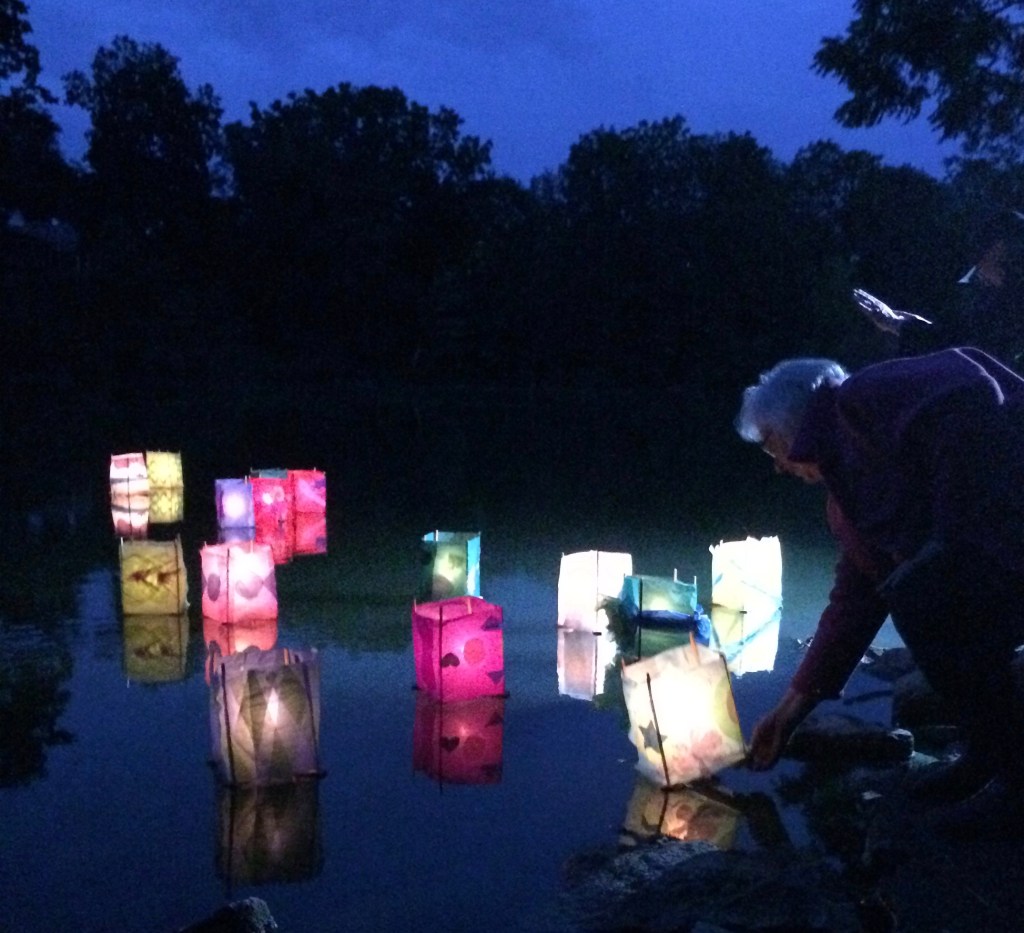
Photo by P Gere

We think that our young people need skills and they do. Skills of the hand and skills of the mind, schooling has always given these in one form or another, to a greater extent at different times. But the skills of the heart and of the spirit have not been front and centre of our education system. They have been left to religions and to family, extended family and community. But with the demise of formal religious observance, the dissolution of extended family, and the lack of deep community ties, these lessons of the heart and spirit are at the mercy of prevailing culture which no longer holds them dear. And that is a grave danger but also an incredible opportunity.

August 6 is the 80th anniversary of the nuclear bombing of Hiroshima, followed on August 9 by that of Nagasaki. As I met with some others to plan a commemorative lantern launching, I mused about what I am doing to prevent such catastrophic events again. For me the action that gives me hope is my belief in the power of change we can bring through the way we choose to educate our young. I try to carry peace in my heart, to act out of peace as I walk in the world but my hope is in the children and youth, my hope is in the power we have to influence the future through our young.

Connection, curiosity, compassion, buttressed by hope and moved by agency. Wouldn’t the world be a better place for everyone – and everything – if we made these three c’s a priority in education?

We humans are connected to everything. To everything that surrounds us – the air we breathe, the water we swallow, the food we eat, the soil that provides our food, the atmosphere that provides just the right conditions for our life. We are connected to the past that brought into being our world, our ancestors, ourselves. We are connected to the future through our children, through what we have done, contributed, taken.

When we approach life with curiosity rather than condemnation or fear we are more likely to see these connections and seek out their significance. Humans are built for inquisitiveness, for creating patterns of understanding, to seek meaning through connecting ideas. It is how we are, it is humanity’s gift.

Compassion. We don’t always get it right. In fact, although we often ignore or conveniently forget, the fact is that we humans learn through approximation, through error. Watch a child learning to walk for the first time, listen to the babbling of a child before they can form words accurately. We’re so accepting of this in children but not in adults – not in ourselves and not in others. Yet it is the way we are built. The reality is that we often make errors on our way to getting things right. Compassion – we need compassion for ourselves and for others. Compassion that comes from seeking to understand (curiosity), and realizing our connection.

What would schooling look like if we prioritized nurturing the capacity for connection, curiosity and compassion buttressed by hope and agency? Yes, our youth need intellectual and practical skills, and reasoning minds, but to use them well they must understand, viscerally, their place in the world and in time, and their capacity and duty to influence that world. What curriculums would we teach but, perhaps more importantly, how would we teach?

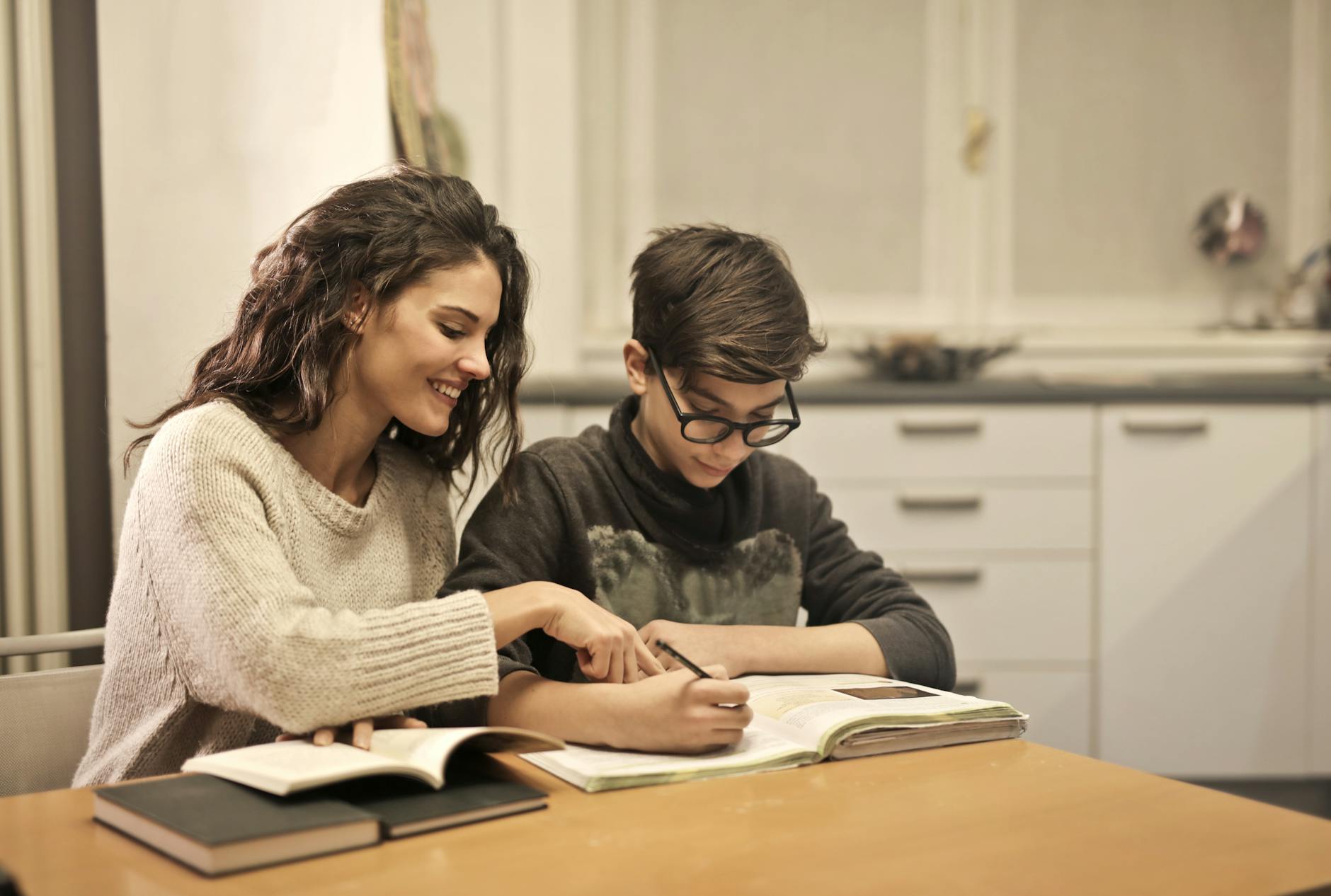
Photo by Kampus Production on Pexels.com

Schooling would have a different character. It might include mixed age classrooms where learning and working together were the primary activity; where observation supported the journey to mastery of skills – where grades were not given but everyone received encouragement, support and acknowledgement of their journey. It might be connected to the world but also to the community that surrounds it, multigenerational with little children bringing smiles to the elderly and receiving hugs and stories in return. With youth learning practical skills and future careers alongside adults already using them. It might be learner-centred and teacher-guided. Here are some programs that are exploring these possibilities – programs that do successfully engage the mind but also the heart and the spirit, benefiting both the student and the world.

The great power of humans is that our children are born only partially formed. They cannot walk or talk or forage for food. Their minds at birth are still learning and absorbing the environment around them. If we surround them with the attributes of a peaceful world, and prioritize connection, curiosity and compassion in their upbringing and education they can and will absorb this and create the peace our world so desperately needs.

Expanding these possibilities into a deeply entrenched educational system will not be easy but neither is it impossible. If we prioritize the conditions of peace as we educate the mind, a ceremony to release lanterns would be solely to console the souls of past victims rather than one for the souls that need consolation now and for the souls in the future that will someday need the same consolation.

Resources related to Hiroshima:

Are We Done Fighting? A book by Matthew Legge brimming with the latest research, practical activities, and inspirational stories of success for cultivating inner change and spreading peace at the community level and beyond.

Hiroshima Interpreters for Peace An organization and website filled with hope.
Exploring the Decline of Canadian Education Quality

On June 21 CTV published What’s causing Canada’s education quality decline? Experts chime in. Aarjavee Raaj, the reporter, pointed out that Canada’s results on several international assessments have been declining since 2000. This is a short article about a major issue – education decline – but it includes a number of assumptions and suggestions that spotlight issues, and if we understand the issues can point to opportunities.

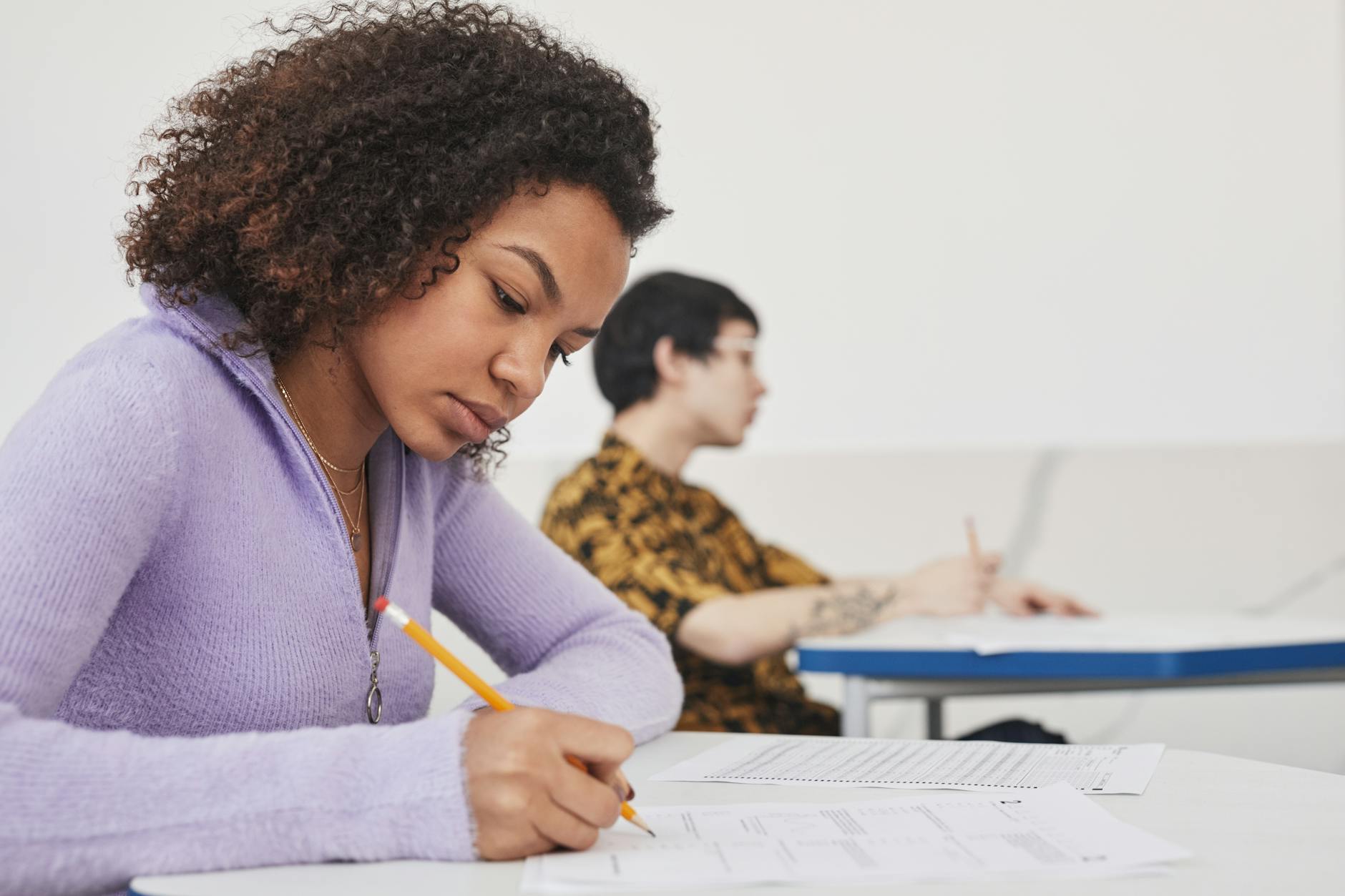
Photo by Andy Barbour on Pexels.com

First, although I agree that the quality of education in the public system in Canada is declining, test scores are only one indication. Equally, or more important, are the increase in violence in schools, the increase in teenage suicides, mental health and addiction issues, the burgeoning business of private tutoring by companies or individuals, declining numbers of those willing to enter the teaching profession, and the increase in the number of teachers whose working conditions have declined so that many leave well before retirement. To tackle one issue without looking at all the others is a ‘whack a mole’ approach with little chance of success. As John Richards, an expert on social policy and education and an author is quoted: “I don’t think there’s one silver bullet that will make Canada go back to where it was at the beginning of the century.”

“Go back to where it was …” Undoubtedly, Richards is referring to going back to the test scores and international ranking we once held but such language also subtly implies that we should go back to the way things were. There are many questions wrapped up in this innocuous statement. Are the international assessments the most important ones for determining education quality? Shouldn’t we be considering new approaches and new ways of assessing, given that we have a very different world and should have very different learning goals? Rather than return shouldn’t we focus on the present and move into the future.

Still, let’s examine the issue of quality from the perspective raised in this article – assessment by tests. One issue the article discusses is ‘summer learning loss’, suggesting that eliminating the long summer vacation may be a solution that would increase knowledge retention and test scores. Really? Summer learning loss was as much a factor in 2000 when scores were higher so it is unlikely to be the cause of the decline. Eliminating summer learning loss may be helpful to increase test scores but it will not uncover or address the underlying issue. (It would also require a major investment in infrastructure given that many public schools are not air conditioned and our summers have more heat and air quality warnings than before.)

In the article, another expert, Todd Cunningham, a clinical and school psychologist and an associate professor at the University of Toronto’s Ontario Institute for Studies in Education (OISE) also suggests that there is evidence that students can maintain their learning over a long summer break if their families have the resources available to support them in maintaining this. This reinforces reconfiguring the school year but it ignores a more significant fact. Private tutoring is the way many children manage to do well in public school these days – if their families can afford it.

Photo by Andrea Piacquadio on Pexels.com

Two of my three publicly schooled grandchildren are tutored which surprised me because both are intellectually capable of doing well. However, they weren’t thriving in school. Tutoring helped the oldest to graduate Grade 8 with honours. Finding a suitable, available tutor for the younger one has been a struggle but she now is being tutored weekly and her confidence and abilities are on the rise.

Even more surprising is that when I discussed tutoring with their parents, I found tutoring is the norm for many of their friends as well. A quick search of tutoring businesses demonstrates the pervasiveness of this trend. The current system of schooling is not serving anyone well and needs to be changed to increase the likelihood that students of parents who can’t afford tutoring have an even chance of success, that we are not widening the gap between the ‘haves’ and ‘have nots’ by the way we school.

On a brighter note, I have recently learned of two programs where test scores improved after a change in programme, changes made for reasons other than directly improving scores.

In the Yukon, several First Nations have their own school board. As Melissa Flynn, executive director of the First Nations School Board states In The Walrus article First Nations Are Rethinking Education in the Yukon and It’s Working: “Improving educational outcomes starts with embedding First Nations world views across subjects, incorporating First Nations language instruction, and inviting Elders into the classroom,” and “Instead of following a top-down hierarchy, the board’s organizational chart places students at the centre, surrounded by parents, teachers, support staff, and the broader community.” The result was reported in the Yukon News: “The board’s 2023/24 report also states that students’ standardized test results have improved by up to fourteen scores. “When Yukon First Nations learners see themselves reflected in the learning and see that their language and culture is being upheld, we find that their attendance and their satisfaction and happiness with school changes,” said Erin Pauls, the board’s director and land and language team lead.”

In Jason Buccheri’s Education Matters Podcast, Designed to Fail with Ira David Socol, Ira tells of a project he brought to a rural, Virginia middle school with socio-economic and diversity challenges. As is his modus operandi, he asked students what they wanted to change about their school. They wanted to change their cafeteria which was outdated, without natural light, dismal. With an architect for support, students decided they would build treehouses for their cafeteria. Yes treehouses, actually rolling treehouses. The entire school spent two weeks dedicated to the task and the results were what Ira described as magnificent. Now it happened that those two weeks were the weeks immediately before the big Virginia exams. This type of activity wouldn’t seem to have much to do with test scores but as Ira recounted, “For the first time in seventeen years the school passed the State Math Exam.” The students had spent two weeks immersed in math that mattered – to them. And it stuck. (This episode of the Education Matters is over two hours long but well worth the listen. You can find the rolling schoolhouses at the 2:00 hour mark.)

Generated with AI

Here is the issue Ira’s experiences raise – that of relying on ‘evidence’ to determine what to change in schooling.  Cunningham is quoted: “We’re trying to help shift the understanding and knowledge base that teachers have to be more in line with what the evidence (shows) are the best practices for literacy and numeracy.” One major concern is where does this evidence come from? Who is funding the research? Independent organizations, or individuals or companies with a stake in the outcome? (The influence of the education business on schooling requires its own research.) Then there is the fact that emphasizing evidence automatically eliminates what hasn’t yet been tried, what is possible, what could be created. Evidence also generally ignores that we aren’t educating widgets that come to us with similar characteristics. We are educating individual human beings with similarities but also the idiosyncrasies that are humanity’s strength.

This CTV article also states that “According to Cunningham, teachers are facing a different set of challenges in the classroom, and there needs to be more investment in the training and upgrading of their knowledge and skills, along with additional support.” Instead of re-educating teachers, why aren’t we investing in systems that would allow teachers to share what their experience says works and doesn’t work? Why do we believe the experts are anywhere but in the classrooms?

“I don’t think there’s one silver bullet that will make Canada go back to where it was at the beginning of the century,” he [Richards] said. Certainly, this is true. But going back to where we were, especially when looked at from the single perspective of assessed academic achievement is not a challenge worth pursuing. We must look beyond this education system that we believe is the only possibility. (We believe it’s the only possibility because it’s already here, because it’s so pervasive, and because it’s so ingrained with government and educational providers including teachers’ education.)

Today’s world is vastly different and ever changing. We desperately require an education system that can keep up, one created for these times. Individuals, organizations and schools have taken up the challenge. Join them in looking up and out at the possibilities.