Using Flow Experiences for Effective Learning

By Pat Gere

We start out as toddlers determined to master walking and talking and feeding ourselves and dressing ourselves and so much more. We end up in high school learning things as a chore, preferring to be entertained. What happened?

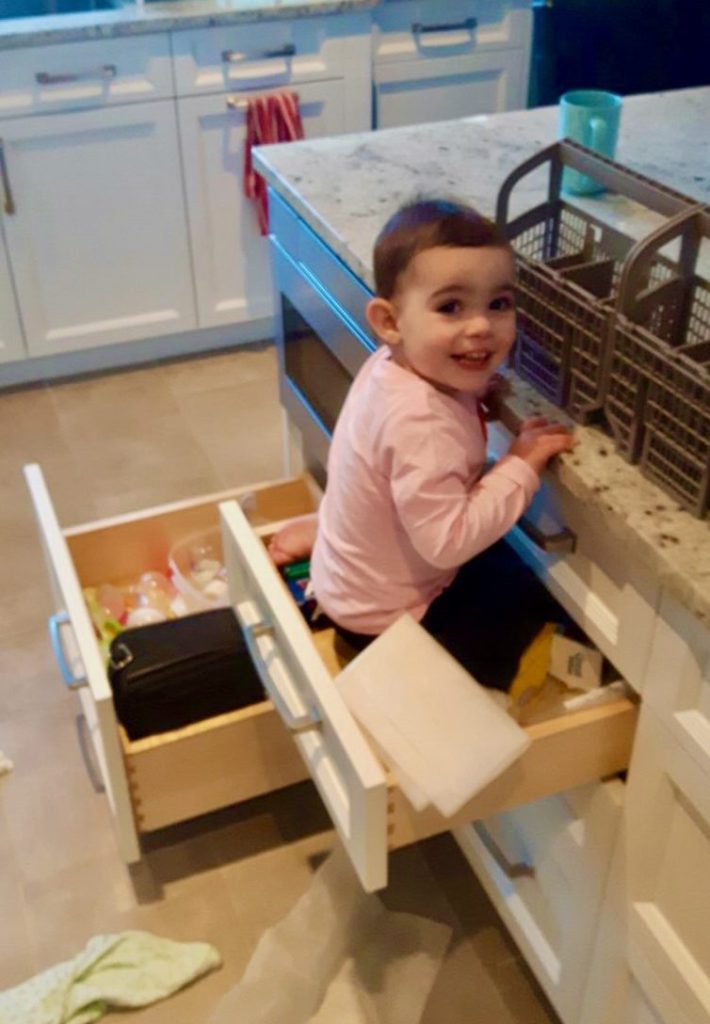
Humans are born with the drive to learn and adapt to their surroundings; it’s our instinctual drive to survive. Most toddlers are surrounded by examples of family and friends talking, walking, eating, and I hope, cooking, reading, playing sports and board games. What they experience and notice, they mimic. And, if we give them the opportunity, what they mimic, they repeat until they master it. Not much deters them.

Photo by P Gere

You’ll notice what I omitted – screens and our ubiquitous phones! Toddlers absorb their use as well. We teach them early who, or what, is most important. A not so tidy, perhaps not so perfect human (them and us) or the screen, the consistent entertainer and gratifier. And later we wonder why adolescents don’t engage with us, or listen to us, or value our opinion. True that was never an adolescent strong suit but now ….

Then there’s school. In spite of the best efforts of educators, school is not set up to meet the needs of youth through their developmental stages. It’s definitely not set up to support each individual’s unique personality and learning style in the way we allow toddlers to follow their internal drives. There’s the soon-to-be morning adult who rises early and accomplishes most of their work by noon versus the soon-to-be ‘I need my coffee’ individual who has their greatest productivity after lunch. There’s the introvert and the extrovert; the mover and the shaker, and the ‘Let me think about that’ ponderer, etc., etc. It’s true we need to adapt to the ‘real’ world but each forced adaptation decreases our intrinsic motivation, our joy in the effort, our joy in ourselves.

Intrinsic motivation, also known as flow – I don’t think education leadership thinks enough about this. I don’t think we adults do. This is a powerful human characteristic that not only allows humanity to adapt to its place and time but fulfills us in doing so. It’s that fulfilment the motivates us. When we are focussed and in flow we feel deep contentment and joy, and when we’re very young that keeps us seeking these experiences, naturally without any direction from the adults around us and often in spite of them. It can also keep us motivated and achieving with a strong feeling of well-being, if we incorporate it into our lives as adults.

So, let’s look at this ‘flow’. Abraham Maslow called it “peak experience;” Dr. Montessori called it “spontaneous activity;” Dr. Csikszentmihalyi called it “flow.”  Flow is a time of deep immersion, total concentration, and it’s overwhelmingly moving; a peak-like experience where you feel completely involved, have momentum, are clear and focused, where you are working at the edge of your skills. You are doing the activity for the rewards inherent in the action, not for an external reward although a reward may result. It’s something you’ve chosen to do even though it takes effort. You’ve likely experienced flow in a sport or activity you love to do; if you’re fortunate, you experience it in your work. When students are in a state of flow they are focused on their activity; do not become tired but rather are gently energized; they are unaware of the passage of time; and they experience a strong feeling of well-being. Flow comes when they choose to be engaged in an activity that is challenging but within their grasp.

To elicit flow in students requires a learning environment that allows for individual choice and provides activities that speak to the developmental characteristics of the students it serves.  These activities can and should have curriculum embedded. The activities must be available so students can make the choice that engages them in the moment. An environment that elicits flow also requires a temporal component. There must be long stretches of time when students who are engaged are not interrupted, since interruption often decreases or interrupts the state of flow.

Making a Parts of a Tree booklet – Photo by P Gere

In this type of learning environment, the adult acts as a concierge, suggesting and introducing activities to a student that are likely to create a state of flow. This means finding the activities that are just right for the student, challenging but within their reach whether in terms of physical or intellectual ability. This means introducing an activity but not insisting that it be done. This means carefully observing a student to see what engages them and when best to introduce something new and what that might be.

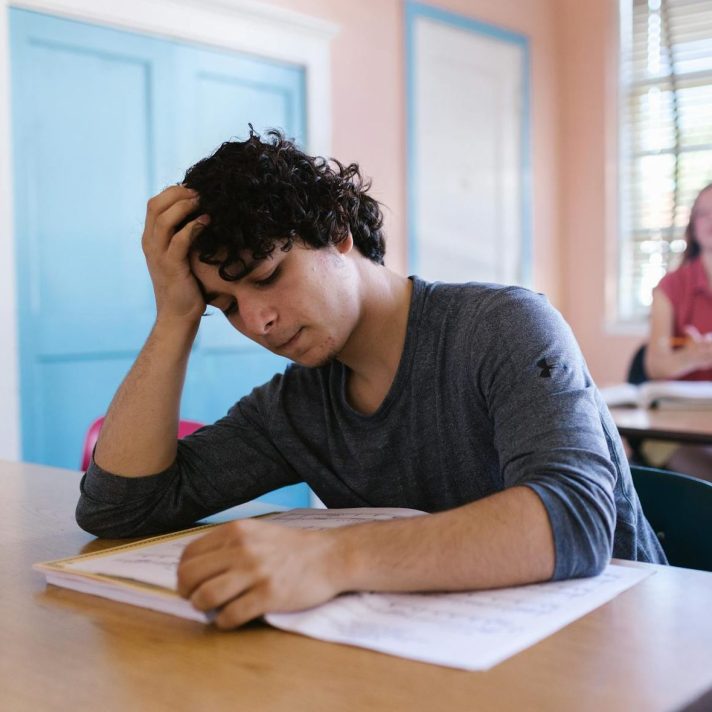
Now one challenge to working with flow is that it might easily be confused with being entertained, especially if a classroom uses screens; and that is another whole topic. Succinctly though, flow requires that an individual direct the experience rather than be directed by something external whether programme, game or person. Flow is gratification that takes time and effort, definitely different from most video games or scrolling TikTok. And flow results in a deep sense of well-being and quiet energy that continues even when the activity comes to an end.

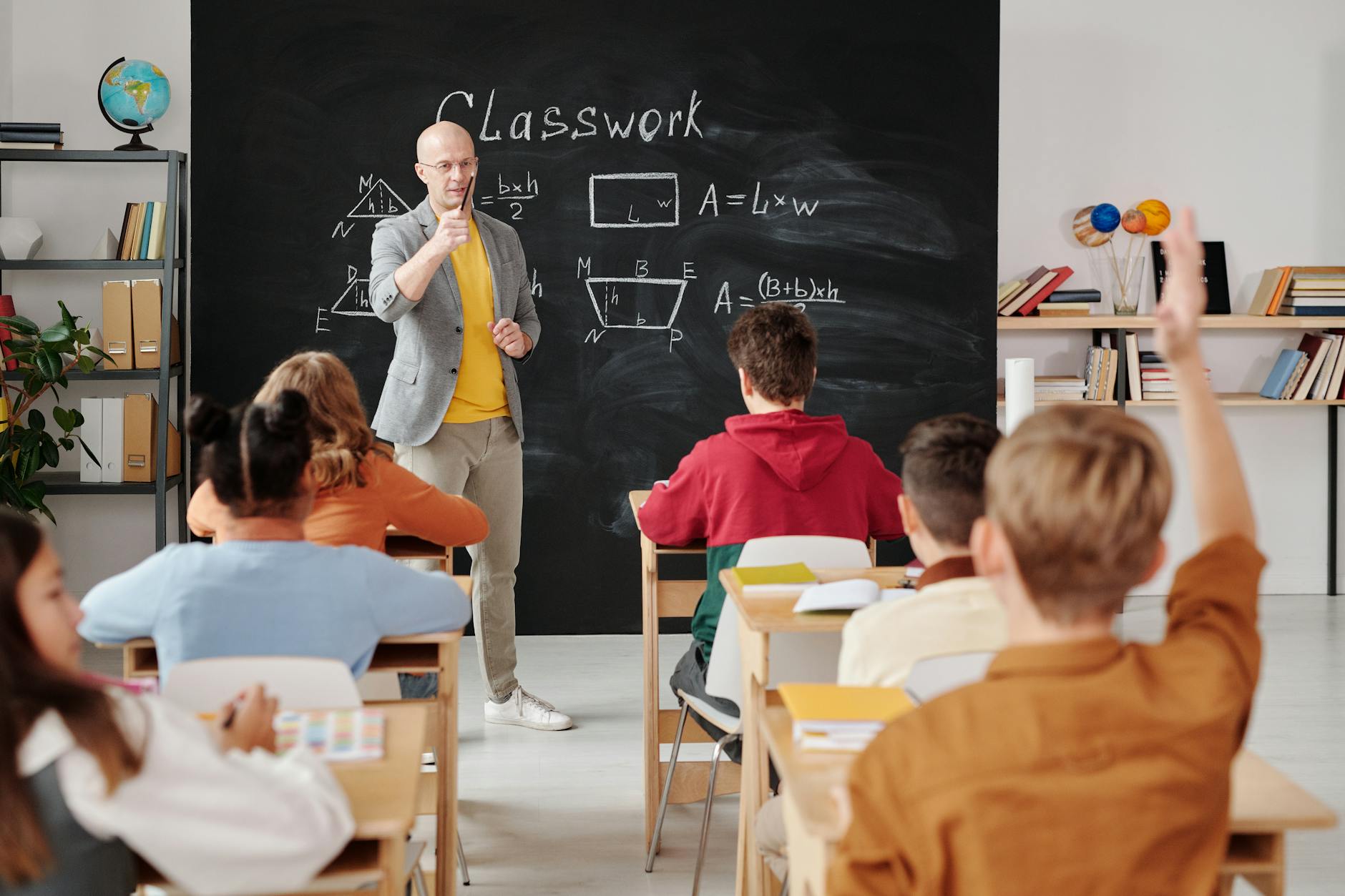
Photo by Andrea Piacquadio on Pexels.com

We can create learning environments that leverage this powerful human gift of flow. High-quality Montessori programs have been based on flow or spontaneous activity for over a century. The newer, learner-centered programs are also firmly grounded in flow.

Educating our youth using flow will not only make learning more efficient and joyful but create a habit, a hankering for flow in the adults they become. Surely our lives and our world be a better place if there was more flow.

Responses

  1. patriciagarneau1954 Avatar
    patriciagarneau1954

    Does your activity have to involve a challenge in order to experiece flow?  Can you experience flow being a Montessori teacher in a classroom or does it only apply to certain kinds of activity? Pat💖Sent from my Galaxy

    Like

    1. Pat Gere Avatar

      My understanding is that challenge is necessary for flow. Any kind of activity can create flow – teaching, writing, painting, playing golf, building something.

      Like

Choosing an Education Paradigm: Curriculum-Centered or Learner-Centered?

By Pat Gere

First let me say that I’m always apprehensive when I’m looking at anything from an either-or mind set. It’s a prevalent mindset in my Western culture and can miss so many nuances – nuances that matter deeply, like the culling and then return of wolves to Yellowstone and the deep impacts each had. Life is more like an ecological system with deep, intricate patterns than it is a grocery aisle where you pick this or that. Still either-or can help us have clarity in choosing. Do we really want the cinnamon, sugar-coated ready-to-pour-and-eat cereal with ingredients we can’t pronounce or should we choose the rolled oats – simple ingredient and greater flexibility but more time intensive?

Our current educational system is built on a curriculum-centered model. This made sense when it began in North America. Youth spent most of their time at home helping their parents on a farm, in a small store or business enterprise, or at home with a big family. Schooling was a limited part of children’s lives, dedicated to reading, writing and ‘rithmetic. Strict discipline kept everyone in line.

Now youth spend less and less time with their parents and in their parents’ lives, and schooling has taken on a greater and greater role in their growth and development. But the model hasn’t changed to accommodate that. There is more curriculum – history, geography, sciences, second languages, IT, etc. There are more add-ons – values of the month and extracurricular clubs and sports but the model of curriculum centricity has not changed.

The result is the type of classroom I described in my last post – sage on the stage, do what you’re told, when you’re told; get as many ‘A’s’ as possible; a scarcity mentality where only one can be best. It is not an efficient way to learn, or to teach. It does not provide the non-intellectual skills that humans need to exist together on this planet.

There are significant, troubling outcomes of curriculum-based education in today’s world. Youth who know how to use YouTube and ChatGPT but don’t know how to care for themselves, so much so that several universities are adding courses to help youth learn basic practical life skills such as how to shop and cook for themselves, do laundry, manage finances. (‘Adulting 101′ programs help Gen Z catch up on key life skills, CBC The Current, May 24, 2025) Now this isn’t all schooling’s fault. ‘Gentle parenting’ and protection bears a part but schooling takes up more of a young person’s time and energy and being curriculum centred does not help fill in the gaps.

Also, curriculum-centered education keeps young people with their age mates for the most part, so young people spend less time than previously with different ages. There are fewer older or younger siblings and sibling friends to hang out with, less time with a new baby or toddler, fewer ‘old folks’ at home or in the community. In fact, less time in community at all. Again, not a fault of the schooling but these are experiences young people used to have but don’t have now, that a different, more flexible type of schooling might help address.

And even if a teacher in this curriculum-centered system saw and wanted to respond to young people’s needs, they rarely have been prepared by their own schooling to do so. The credentials required for teaching focus on teaching curriculum, classroom management, navigating the profession of teaching but, at least in Ontario, there is no requirement to learn about human development – the physical, intellectual, emotional and social characteristics that humans have at different stages. How can a teacher respond to the missing pieces of their students’ lives if they don’t know what they have to work with?

One growing alternative to curriculum-centered education is learner-centered programs. The curriculum still exists in learner-centered programs. These are not do whatever you want programs, but programs that take as a focus the learner and the environments that the learner is a part of – the natural world, their physical location, their community, From that focus comes a spark, an activity that engages and enlivens the learners so that they learn curriculum from their deep, innate drive to become competent humans. Since learner-centered education responds to the needs of learners and the resources available in their communities, it embodies more opportunities to respond to the complexities that make up our human life.

More and more we humans are becoming aware of our place in the world. We are part of a complex system, a complex system of complex systems. We have enormous power and if we hope to survive we must deeply understand and appreciate the complexity of the systems we impact, and we impact everything, all the time. We must also have a sense of how this power in embodied in ourselves and our fellow humans so we don’t become overwhelmed, distraught and disengage.

Climate change, wars, extinctions – we humans have created disasters with our power but we also have enormous opportunity to prepare our young to handle power and create positive change. It exists in the special human power of adaptation. Each human generation adapts to the world that exists around it, to the culture and world that exists around the infant/child as they grow, to the child rearing practices we use, and to the education system they experience. Today’s world needs an education system that takes as its basis not the curriculum to be taught but the learner and the ecosystem that that learner is to be a part of. An education system that can do more – by responding to the individual and by layering the teaching of curriculum with ways of being in the world and with one another. A system that is flexible to the times and the individual learners so that we, humanity, can maximize the gifts each individual brings to create the ecosystems that sustain us and the world of which we are an integral part.

We’ve seen changes in schooling come and go: open classrooms, phonics, whole language, rote math, new math, new curriculums. What we need is a deeper, more all-encompassing change, a change in underlying assumptions and goals, a change in paradigm away from curriculum-centered to a more responsive model. A model that capitalizes on the fact that how we educate is as important as the curriculum we teach; a model that recognizes that we learn more deeply through experience than mere instruction. We must educate our young people so they know who they are and how to care for themselves; so they value the richness of community and society; so they understand the importance of their roles as citizens, world citizens; the importance of their best selves to the future.

Take a look at some alternative models including a brief overview of Montessori education.

Just adding skim milk to our processed cereal is not going to create the change we need. It’s time for a new education, starting with the basic foundations of human development and societal needs.  It’s time for a paradigm shift and perhaps learner-centered programs are leading the way.

The Structural Violence of Schools

By Pat Gere

Dave McGinn’s Globe and Mail opinion piece published May 11, “Study warns violence in Ontario schools is at ‘crisis levels’ for teachers and education workers,” is dire. The article discusses studies done on violence in Ontario schools, particularly a new report by researchers from the University of Ottawa released last month – ‘Running on Fumes: Violence, Austerity, and Institutional Neglect in Ontario Schools.’  Violence in schools is continuing to increase and the study outlines a number of causes: underfunding, overcrowded classrooms, increasing student needs, lack of supports, as well as food insecurity.

Professor Bruckert, a criminology professor and one of the study’s authors is quoted: “It‘s really important not to see this as bad kids or demonize kids. This is truly structural violence. This is institutional violence. This is a failure to respond to needs that ends up being enacted like violence,” Prof. Bruckert says.

I want to focus here on the role of the institution, the role of its structure.

Our current education system was developed with the premise that you had to reward or coerce learners to get them to apply themselves. Most of us clearly remember the impact of grades and as late as the 1980’s corporal punishment was still administered in schools in Canada and remains a ‘motivator’ in many parts of the world to this day.

The carrot and stick are necessary when the system requires learners to follow directions, follow schedules, eat when you’re told to, read when you’re told to, write or do math when you’re told to, learn particular information when you’re told to, or put something interesting down even if you’re not finished with it. Strict discipline was and is necessary for an educational method that goes against the natural inclinations of children and youth, and in fact, against the inclinations of humans in general.

Today we have the same education system but we don’t use punishments. I’m not suggesting that we should punish, but without the ability to enforce strict discipline this system of education is doomed. One indication is the violence we see growing in schools. Students acting out, confronting authority without significant consequences, failing to learn or to thrive, and impacting the learning of classmates.

Imagine yourself following the routine of a Grade 6’er. You’re sitting in a large class for long periods, studying subjects that don’t have immediate relevance. There’s one teacher to manage everyone and it’s easy to hide, ignore, needle, confront or outright refuse an instruction. If you have difficulty in a subject, you’ll still be moved ahead from grade to grade without the support to manage the higher-level work, thus placing you in situations where you cannot possibly succeed. After being in school from 9 AM to 3:30PM, you are sent home with more work to do. If your parents have time or financial resources they can try to assist you or get you a tutor. You still must work overtime in order to succeed.

Even as an adult, could you manage this day after day? Would you be willing to? Could you be successful in this type of environment? Could you learn? Would you be willing to supervise much less try to teach in this environment?

One response to managing without using punishments has been to increase the entertainment quotient of what is being offered. Find the most engaging video. Find the most enticing online game. But this approach has its own challenges. It is not an efficient way to learn as the entertainment is primary, the educational concept secondary. It doesn’t support creativity, compassion for others, or agency, the willingness and desire to act. And given that today’s youth spend most of their time being entertained, including through social media, it is hard to compete.

There are other ways to educate. They can be difficult for us to consider because the current institution is so pervasive. It’s hard to imagine there is anything else …  but there is.

There are education models that take as their basis our natural human tendencies to move, explore, orient, organize, communicate, and connect. All humans are born with these tendencies. You’ve seen them in young children. The infant reaching for a coloured object or surprised by rolling over; a young child attempting to crawl, mimicking speech, taking that first step. We are hard-wired to explore and master our world and we can use this to create learning environments based on these innate characteristics rather than on external carrots and sticks, or entertainment.

This type of education model is often referred to as learner-centered and it’s a growing movement. One type of learner-centered education that has been around for a long time, spread globally, and has research to support its efficacy, and the one I know best, is Montessori. Let me describe it briefly to give you an idea of what else is possible.

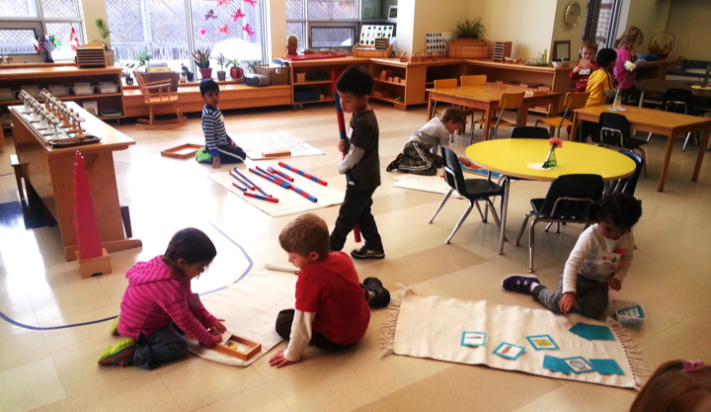
In a Montessori classroom, a series of activities covering all aspects of the curriculum are arraigned on shelves accessible to the learners. The activities are specifically designed to appeal to the characteristics of that age and provide for movement, exploration, precision, and increasing competency. In a Montessori environment the adult acts as a guide, introducing an individual learner or a small group of learners to an activity that the guide believes will be of interest. The guide demonstrates how to use the activity but leaves the learners free to interact with it themselves. By observing the learner’s activity, the guide can gauge the learner’s interest, focus, and growing understanding of the underlying concept. What is right for one learner won’t be the right choice for another so in a Montessori classroom, learners are busy with many different activities. Learners work independently, driven by their innate human characteristics rather than by external rewards or punishments. The goal of the guide is finding the right intersection of the knowledge or skill to be learned and an individual’s need and passion. When a learner is engaged in this way, they are very focused, learn easily, persevere, don’t tire, are energized and feel good about themselves, a state described by Dr. Csikszentmihalyi as flow. There really is no downside. When you feel accomplished and satisfied, you are willing to contribute rather than disrupt, to help rather than hinder.

Montessori is one example of a learner-centered ecosystem. There are others and it’s past time to seriously consider a revolution in the institution of education. For our children’s sake, and for the world’s.