Hope Agency Compassion Curiosity Connection
We think that our young people need skills and they do. Skills of the hand and skills of the mind, schooling has always given these in one form or another, to a greater extent at different times. But the skills of the heart and of the spirit have not been front and centre of our education system. They have been left to religions and to family, extended family and community. But with the demise of formal religious observance, the dissolution of extended family, and the lack of deep community ties, these lessons of the heart and spirit are at the mercy of prevailing culture which no longer holds them dear. And that is a grave danger but also an incredible opportunity.
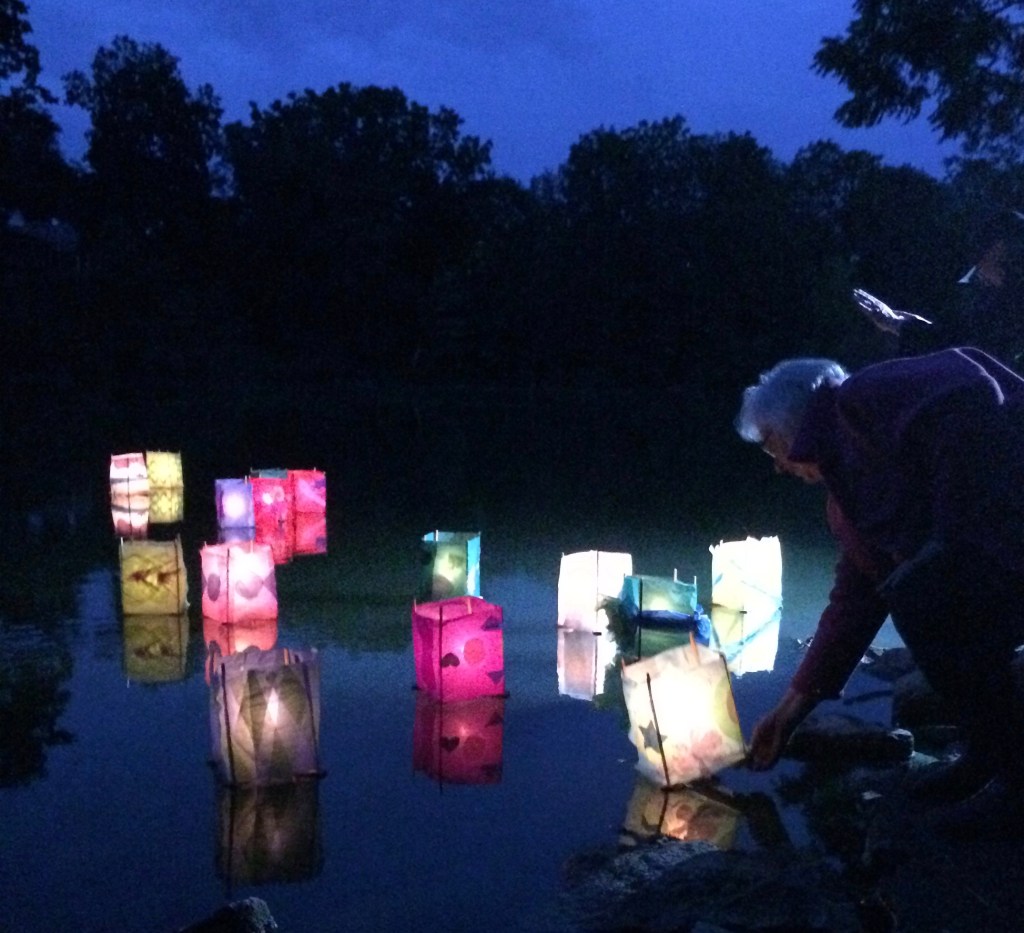
August 6 is the 80th anniversary of the nuclear bombing of Hiroshima, followed on August 9 by that of Nagasaki. As I met with some others to plan a commemorative lantern launching, I mused about what I am doing to prevent such catastrophic events again. For me the action that gives me hope is my belief in the power of change we can bring through the way we choose to educate our young. I try to carry peace in my heart, to act out of peace as I walk in the world but my hope is in the children and youth, my hope is in the power we have to influence the future through our young.
Connection, curiosity, compassion, buttressed by hope and moved by agency. Wouldn’t the world be a better place for everyone – and everything – if we made these three c’s a priority in education?
We humans are connected to everything. To everything that surrounds us – the air we breathe, the water we swallow, the food we eat, the soil that provides our food, the atmosphere that provides just the right conditions for our life. We are connected to the past that brought into being our world, our ancestors, ourselves. We are connected to the future through our children, through what we have done, contributed, taken.
When we approach life with curiosity rather than condemnation or fear we are more likely to see these connections and seek out their significance. Humans are built for inquisitiveness, for creating patterns of understanding, to seek meaning through connecting ideas. It is how we are, it is humanity’s gift.
Compassion. We don’t always get it right. In fact, although we often ignore or conveniently forget, the fact is that we humans learn through approximation, through error. Watch a child learning to walk for the first time, listen to the babbling of a child before they can form words accurately. We’re so accepting of this in children but not in adults – not in ourselves and not in others. Yet it is the way we are built. The reality is that we often make errors on our way to getting things right. Compassion – we need compassion for ourselves and for others. Compassion that comes from seeking to understand (curiosity), and realizing our connection.
What would schooling look like if we prioritized nurturing the capacity for connection, curiosity and compassion buttressed by hope and agency? Yes, our youth need intellectual and practical skills, and reasoning minds, but to use them well they must understand, viscerally, their place in the world and in time, and their capacity and duty to influence that world. What curriculums would we teach but, perhaps more importantly, how would we teach?

Schooling would have a different character. It might include mixed age classrooms where learning and working together were the primary activity; where observation supported the journey to mastery of skills – where grades were not given but everyone received encouragement, support and acknowledgement of their journey. It might be connected to the world but also to the community that surrounds it, multigenerational with little children bringing smiles to the elderly and receiving hugs and stories in return. With youth learning practical skills and future careers alongside adults already using them. It might be learner-centred and teacher-guided. Here are some programs that are exploring these possibilities – programs that do successfully engage the mind but also the heart and the spirit, benefiting both the student and the world.
The great power of humans is that our children are born only partially formed. They cannot walk or talk or forage for food. Their minds at birth are still learning and absorbing the environment around them. If we surround them with the attributes of a peaceful world, and prioritize connection, curiosity and compassion in their upbringing and education they can and will absorb this and create the peace our world so desperately needs.
Expanding these possibilities into a deeply entrenched educational system will not be easy but neither is it impossible. If we prioritize the conditions of peace as we educate the mind, a ceremony to release lanterns would be solely to console the souls of past victims rather than one for the souls that need consolation now and for the souls in the future that will someday need the same consolation.
Resources related to Hiroshima:
Are We Done Fighting? A book by Matthew Legge brimming with the latest research, practical activities, and inspirational stories of success for cultivating inner change and spreading peace at the community level and beyond.
Hiroshima Interpreters for Peace An organization and website filled with hope.
Discover more from Convening Education Change
Subscribe to get the latest posts sent to your email.


Wonderful reflection. Thanks Pat. I’m sure you will include this somehow
LikeLike
Children are our hope for a peaceful world is what attracted me to Montessori education in the first place.. And I spent my career believing in and promoting the idea. But 37 years later it’s hard to assess the impact. For me it can only be measured in fingerprints and the hope that it mattered and was enough…Sent from my Galaxy
LikeLike