
By Pat Gere
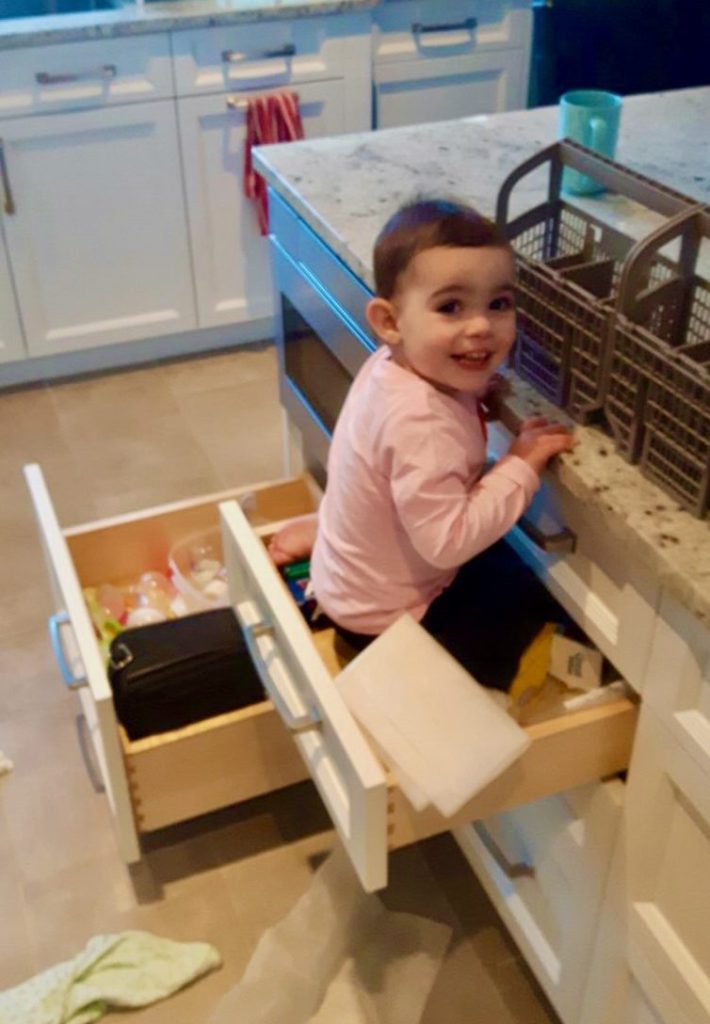
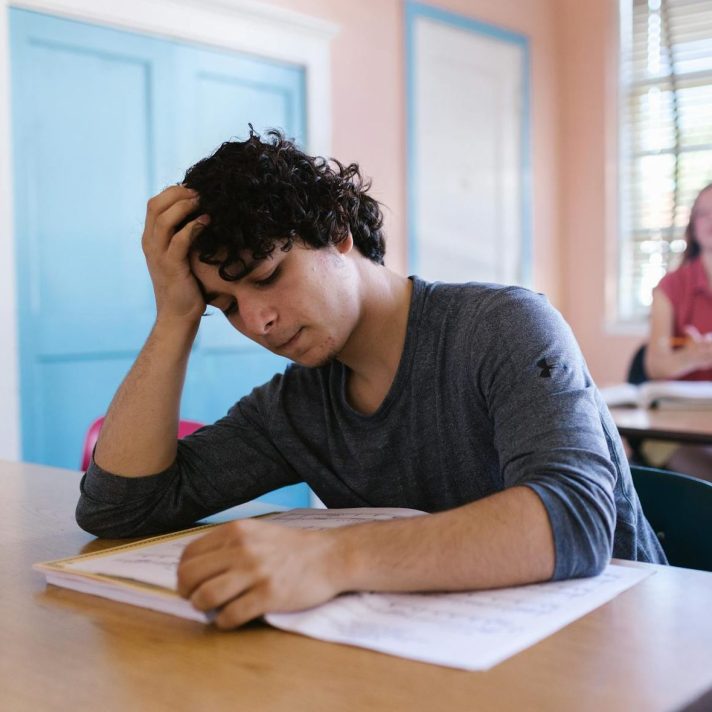
We start out as toddlers determined to master walking and talking and feeding ourselves and dressing ourselves and so much more. We end up in high school learning things as a chore, preferring to be entertained. What happened?
Humans are born with the drive to learn and adapt to their surroundings; it’s our instinctual drive to survive. Most toddlers are surrounded by examples of family and friends talking, walking, eating, and I hope, cooking, reading, playing sports and board games. What they experience and notice, they mimic. And, if we give them the opportunity, what they mimic, they repeat until they master it. Not much deters them.

You’ll notice what I omitted – screens and our ubiquitous phones! Toddlers absorb their use as well. We teach them early who, or what, is most important. A not so tidy, perhaps not so perfect human (them and us) or the screen, the consistent entertainer and gratifier. And later we wonder why adolescents don’t engage with us, or listen to us, or value our opinion. True that was never an adolescent strong suit but now ….
Then there’s school. In spite of the best efforts of educators, school is not set up to meet the needs of youth through their developmental stages. It’s definitely not set up to support each individual’s unique personality and learning style in the way we allow toddlers to follow their internal drives. There’s the soon-to-be morning adult who rises early and accomplishes most of their work by noon versus the soon-to-be ‘I need my coffee’ individual who has their greatest productivity after lunch. There’s the introvert and the extrovert; the mover and the shaker, and the ‘Let me think about that’ ponderer, etc., etc. It’s true we need to adapt to the ‘real’ world but each forced adaptation decreases our intrinsic motivation, our joy in the effort, our joy in ourselves.
Intrinsic motivation, also known as flow – I don’t think education leadership thinks enough about this. I don’t think we adults do. This is a powerful human characteristic that not only allows humanity to adapt to its place and time but fulfills us in doing so. It’s that fulfilment the motivates us. When we are focussed and in flow we feel deep contentment and joy, and when we’re very young that keeps us seeking these experiences, naturally without any direction from the adults around us and often in spite of them. It can also keep us motivated and achieving with a strong feeling of well-being, if we incorporate it into our lives as adults.
So, let’s look at this ‘flow’. Abraham Maslow called it “peak experience;” Dr. Montessori called it “spontaneous activity;” Dr. Csikszentmihalyi called it “flow.” Flow is a time of deep immersion, total concentration, and it’s overwhelmingly moving; a peak-like experience where you feel completely involved, have momentum, are clear and focused, where you are working at the edge of your skills. You are doing the activity for the rewards inherent in the action, not for an external reward although a reward may result. It’s something you’ve chosen to do even though it takes effort. You’ve likely experienced flow in a sport or activity you love to do; if you’re fortunate, you experience it in your work. When students are in a state of flow they are focused on their activity; do not become tired but rather are gently energized; they are unaware of the passage of time; and they experience a strong feeling of well-being. Flow comes when they choose to be engaged in an activity that is challenging but within their grasp.
To elicit flow in students requires a learning environment that allows for individual choice and provides activities that speak to the developmental characteristics of the students it serves. These activities can and should have curriculum embedded. The activities must be available so students can make the choice that engages them in the moment. An environment that elicits flow also requires a temporal component. There must be long stretches of time when students who are engaged are not interrupted, since interruption often decreases or interrupts the state of flow.

In this type of learning environment, the adult acts as a concierge, suggesting and introducing activities to a student that are likely to create a state of flow. This means finding the activities that are just right for the student, challenging but within their reach whether in terms of physical or intellectual ability. This means introducing an activity but not insisting that it be done. This means carefully observing a student to see what engages them and when best to introduce something new and what that might be.
Now one challenge to working with flow is that it might easily be confused with being entertained, especially if a classroom uses screens; and that is another whole topic. Succinctly though, flow requires that an individual direct the experience rather than be directed by something external whether programme, game or person. Flow is gratification that takes time and effort, definitely different from most video games or scrolling TikTok. And flow results in a deep sense of well-being and quiet energy that continues even when the activity comes to an end.

We can create learning environments that leverage this powerful human gift of flow. High-quality Montessori programs have been based on flow or spontaneous activity for over a century. The newer, learner-centered programs are also firmly grounded in flow.
Educating our youth using flow will not only make learning more efficient and joyful but create a habit, a hankering for flow in the adults they become. Surely our lives and our world be a better place if there was more flow.
Responses
-
Does your activity have to involve a challenge in order to experiece flow? Can you experience flow being a Montessori teacher in a classroom or does it only apply to certain kinds of activity? Pat💖Sent from my Galaxy
LikeLike
-
My understanding is that challenge is necessary for flow. Any kind of activity can create flow – teaching, writing, painting, playing golf, building something.
LikeLike
-


Discover more from Convening Education Change
Subscribe to get the latest posts sent to your email.


Does your activity have to involve a challenge in order to experiece flow? Can you experience flow being a Montessori teacher in a classroom or does it only apply to certain kinds of activity? Pat💖Sent from my Galaxy
LikeLike
My understanding is that challenge is necessary for flow. Any kind of activity can create flow – teaching, writing, painting, playing golf, building something.
LikeLike